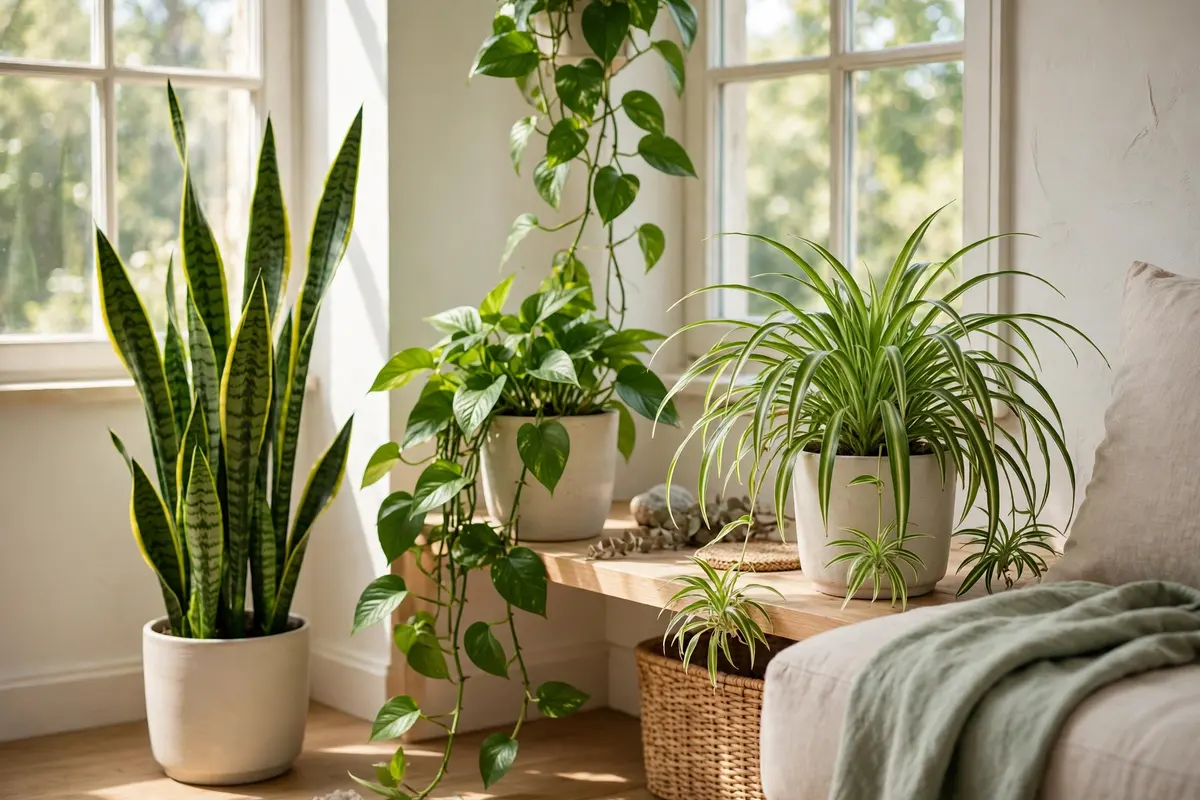
Every confident plant owner started with a plant they nearly killed. The difference between a bare windowsill and a green, calming home is rarely talent — it is choosing forgiving plants and learning a handful of simple habits. This guide to indoor plants for beginners focuses on houseplants that tolerate missed waterings, imperfect light and enthusiastic beginners, plus the basic care rules that keep them alive long enough to make you look like a natural.
Start with Plants That Forgive Beginners
Your first houseplants should be hard to kill and easy to read. The pothos trails happily from a shelf and tells you it is thirsty by drooping slightly, then perks up within hours of watering. Snake plants store water in their thick leaves and forgive weeks of neglect, making them ideal for busy or forgetful owners. Spider plants grow fast, tolerate a wide range of light and produce baby plantlets you can pot up and give away. Peace lilies prefer a little more moisture but reward you with elegant white blooms and a dramatic wilt that is basically a built-in watering alarm.
Choose two or three plants to begin with, not twelve. A small collection lets you learn each plant’s rhythm — how fast its soil dries, where it likes to sit — before you expand. Gardeners who plan their outdoor planting with the same patience, as in our feature on phlox and other rewarding garden investments, know that steady, observant care beats impulse buying every time.
Light: The One Thing Indoor Plants for Beginners Must Get Right
Most beginner losses come from light, not water. Read your room honestly: a bright windowsill with a few hours of gentle sun suits most flowering plants; a spot a metre or two back from the window gives the bright, indirect light that pothos, spider plants and most foliage favourites prefer; a dim hallway will slowly starve almost anything except the toughest snake plants and cast iron plants. Rotate pots a quarter turn each week so growth stays even instead of leaning toward the glass.
If your home is short on natural light, move plants closer to the brightest room rather than buying supplements straight away. And remember that more plants die from kindness in dark corners — overwatering a plant that is already short of light — than from almost any other cause.
Watering, Soil and Pots Without the Guesswork
Forget schedules; check the soil. Push a finger two centimetres into the compost: if it feels dry, water thoroughly until a little drains out, then empty the saucer so roots never sit in water. If it feels moist, wait. Nearly all common houseplants prefer this soak-and-dry rhythm to little-and-often sipping. Always choose pots with drainage holes, and use a free-draining houseplant compost rather than garden soil, which compacts indoors and holds too much water.
Feeding is simpler than the internet suggests: a weak general feed once a month in spring and summer is plenty for the forgiving plants in this guide, and none at all is needed in winter. Clean leaves with a damp cloth every few weeks — dust blocks light, and light, as every beginner learns, is the whole game.
Three beginner mistakes account for most casualties, and all three are easy to avoid. The first is repotting a new plant the day it comes home; let it settle for a few weeks unless roots are escaping the pot. The second is misting leaves instead of watering soil — misting raises humidity for minutes, while roots need the drink. The third is moving a struggling plant to a darker “rest” spot, when nine times out of ten it needs more light, not less. When a plant looks unhappy, change one thing at a time and wait a week. Plants respond slowly, and patience is a care technique in itself.
Make Plants Part of a Calmer Home
Houseplants earn their place by changing how a home feels. A trailing pothos softens a bookshelf; a tall snake plant gives an empty corner a reason to exist; a spider plant on the kitchen counter makes washing up noticeably more pleasant. Grouping plants also helps them — clustered pots raise the humidity around each other slightly — and it helps you, because caring for one green corner is easier than tending plants scattered through every room.
Plants pair naturally with the other quiet pleasures of home. A reading chair beside your green corner, a board game on the table from our favourite family game night ideas, and an evening without screens can turn an ordinary room into the best place in the house. Homes that feel cared for usually get help staying that way too — as the services in our guide to quality home services show, a little regular attention prevents most big problems, and plants are no different.
Slow Hobbies That Grow on You
Beginners often discover that plants are a gateway to slower, more observant hobbies in general. Keeping a simple notebook of when you watered, repotted and noticed new growth is the horticultural version of learning how to start a travel journal — small records that turn into a story over time. A quiet puzzle offers the same gentle focus, as anyone hooked on entertaining crossword clues will tell you; plants simply reward patience with something alive.
Even grooming the home itself becomes more satisfying with greenery in it — the same impulse behind a tidy grooming routine from our piece on home barber services. Start with one pothos and one snake plant this weekend. Give them honest light, water only when the soil asks, and let them teach you the rest.
Within a few months you will get the beginner’s favourite reward: free plants. Spider plants dangle baby plantlets that root happily in a jar of water; pothos cuttings do the same from any healthy stem trimmed just below a node. Potting up your first propagation — and giving it to a friend who insists they kill everything — is the moment most people realise they have quietly become plant people. That is the real promise of starting with forgiving houseplants: small, steady success builds the confidence to try the next, slightly fussier thing.