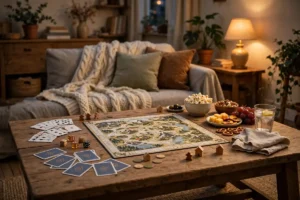
A family game night is one of the easiest traditions to start and one of the hardest to keep going, because life keeps getting in the way. Yet families that play together regularly say the same thing: it is the one evening when everyone is present, laughing, and actually talking. No screens, no schedules, just a table, a game, and each other. This guide covers how to plan a fun family game night that everyone looks forward to, from choosing the right games to keeping the evening relaxed when competition heats up.
Choose Games Everyone Can Enjoy
The biggest mistake in family game night is choosing a game that only half the family enjoys. A game that is too complex frustrates younger players, while one that is too simple bores teenagers. The best family games have simple rules and room for strategy, so a child can play while an adult still finds it interesting. Card games, word games, and light board games usually work best, because they can be learned in five minutes and finished within an hour.
Keep a small collection of games rather than one favourite, and rotate them so the evening stays fresh. Let each family member choose a game in turn, so everyone feels ownership over the night. If your family enjoys storytelling and adventure, tabletop games are a natural next step: tabletop adventure packs show how role-playing games can bring a whole family into one shared story. For quieter evenings, crossword puzzles and word challenges give everyone a chance to contribute, whatever their age.
Set the Evening Up for Success
Timing matters more than most families expect. Pick a regular evening, such as Friday or Saturday, and protect it the way you would any appointment. An hour to ninety minutes is the sweet spot: long enough for two short games or one longer one, short enough that younger players do not lose focus. Start on time, even if someone is late, so the evening does not dissolve into waiting around.
Set the table before anyone sits down: the game, the rules within reach, drinks, and snacks that are easy to eat while playing. Finger food beats anything needing cutlery, and a cloth or tray under the snacks protects the board. Put phones away for the duration, ideally in another room, because a single notification can pull the whole table out of the game. The point of the evening is presence, and presence needs a little protection from distraction.
Keep Competition Friendly
Every family has a competitive streak, and a little of it makes games exciting. Too much of it ruins the evening. Set the tone early: the goal is fun, not winning, and teasing a losing player is off limits. For families with a wide age range, team games work beautifully, because they pair younger and older players together and turn competition into cooperation. Cooperative games, where everyone wins or loses together, are another excellent option for families where losing causes tears.
If a game is going badly for someone, it is fine to change the rules slightly, shorten the game, or switch to something else. No tradition survives if it regularly ends in arguments. End the evening on a high note, even if that means stopping a game early while everyone is still enjoying it. A game night that ends with laughter is one everyone will want to repeat, and that is the whole point. Families looking for more ideas can explore new directions in home entertainment for fresh formats, and word games for language learning show how game night can quietly teach as well as entertain.
Snacks and Drinks for Game Night
Snacks are part of the tradition, not an afterthought. Popcorn, crisps, fruit, and cheese are all easy to eat while playing, and they keep hands busy between turns. Let children help choose and prepare the snacks, whether that means filling bowls, arranging a plate, or picking between two treats. When everyone has contributed something, the evening already feels shared before the first move is made.
Keep drinks simple and spill-proof where possible, with water always available alongside anything sweet. If anyone in the family has allergies or dietary needs, plan the snacks around them from the start rather than as an afterthought: a game night where everyone eats the same food feels inclusive, and it is usually simple to arrange. A tray or low table keeps everything off the board, and a quick tidy-up at the end, done together, closes the evening neatly.
Make It a Tradition That Lasts
Traditions survive on small rituals. A special snack that only appears on game night, a trophy that passes to the week’s winner, or a rule that the winner chooses next week’s game all give the evening its own identity. Let children help set up and choose, because a tradition they helped build is one they will defend when schedules get busy. Keep a list of games the family wants to try, so the next choice is never a struggle.
Most importantly, be flexible. Some weeks the game night will be short, some weeks it will be just two people, and some weeks it will not happen at all. That is normal, and it does not break the tradition. What matters is returning to it the next week, without guilt and without a lecture. A family game night is a small investment with a large return: shared laughter, shared stories, and a weekly moment when everyone is simply together, around the same table, playing the same game.