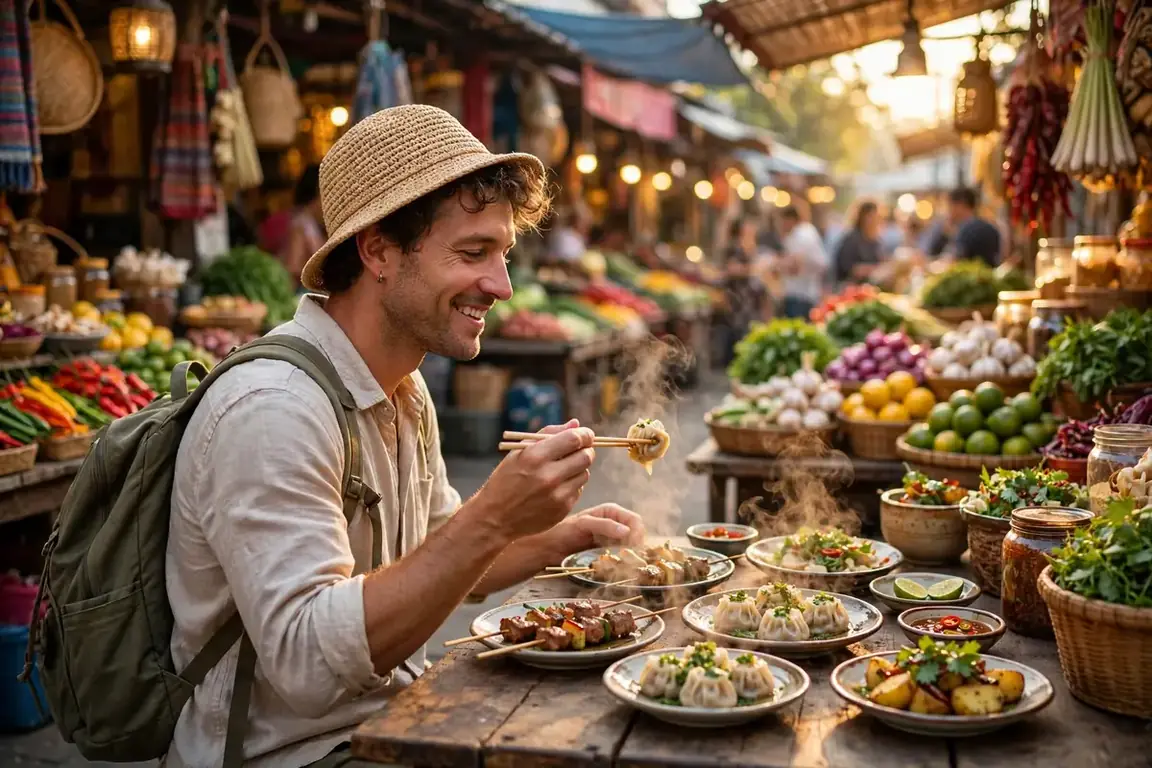
The best meal of a trip is rarely the most expensive one. It is the skewer eaten standing up at a night market, the soup slurped at a plastic table while scooters hum past, the pastry still warm from a cart that has served the same corner for thirty years. Street food is how cities feed themselves and how travellers taste a place honestly — but it comes with one fair question: how do you eat adventurously without spending the next day in your hotel room? These street food safety tips are the ones experienced travellers actually use, gathered from markets on several continents, so you can say yes to the stall with confidence.
Choose Busy Stalls With High Turnover
The single most reliable rule in street food is to follow the crowd. A stall with a queue of local customers is cooking constantly, which means ingredients move quickly, oil gets refreshed and nothing sits around at unsafe temperatures. Watch for a moment before ordering: food cooked to order in front of you is always a safer bet than food that has been waiting under a heat lamp or in the sun. Cleanliness signals matter too — separate handling of money and food where possible, raw ingredients stored away from cooked ones, and a workspace that gets wiped down. None of this requires paranoia; it is the same judgement you would use choosing where the locals plan their meals, much like the approach in our guide on how to plan a food journey.
Hot, Fresh and Fully Cooked Wins
Heat is your friend. Dishes cooked at high temperature and served steaming — grilled meats, stir-fries, soups, dumplings, fried snacks straight from the wok — are the safest place to start in any new food scene. Be more cautious with raw or lightly cooked items in places where your stomach is new to the local microbes: raw salads washed in uncertain water, uncooked shellfish and cold dishes that may have waited unrefrigerated. This is not about fearing local food; it is about sequencing. Give your system a few days of cooked dishes first, and explore further once you have your bearings. Street food cultures are generous, and the famous dishes that draw visitors to places like those in our guide to the best places to visit in Seoul during spring are almost always cooked fresh in front of you.
Water, Ice and Raw Produce
Most travel stomach trouble travels through water, not food. Where tap water is not recommended for visitors, drink sealed bottled or properly filtered water, and check the seal. Ice deserves a thought too: factory-made ice, usually in uniform shapes with holes, is generally produced from treated water, while irregular crushed ice from uncertain sources is the riskier bet in places with weak water treatment. For raw fruit, choose what you can peel yourself — bananas, oranges, mangoes, dragon fruit — and be warier of pre-cut fruit sitting out in the heat. Salads are the classic judgement call: in destinations with reliable water they are fine; where you are unsure, cooked vegetables carry the same flavours with none of the doubt.
Hands, Money and Small Habits
The germs most likely to trouble you may be your own travelling companions: your hands. Carry a small bottle of hand sanitiser and use it before eating, especially after handling money, railings and transport. Wet wipes help where hands and tables are sticky. Try to eat with the hand or utensils the culture uses, and avoid touching your face mid-meal out of habit. If a vendor handles both cash and food barehanded and it bothers you, simply choose the next stall — in a good market there is always a next stall. These tiny routines, repeated without drama, are what separate travellers who eat everything from travellers who regret everything.
Markets, Night Stalls and Food Tours
Different settings call for slightly different tactics. Night markets reward grazing: order small, share everything, and let each stall be a course, which naturally limits how much of any single dish you eat. Morning markets near transport hubs often serve the freshest food of the day, cooked for workers who cannot afford a sick day — a demographic that keeps standards honest. If you want maximum range with minimum risk on a first evening, a guided street food tour is money well spent: a good guide knows which stalls have queues for the right reasons, orders the dishes you would never have decoded alone, and paces the evening so you taste twelve things without overdoing any of them. After a tour or two, most travellers find their confidence — and their instincts — are permanently upgraded for the rest of the trip.
Know Your Limits and Travel Prepared
Even careful travellers get caught occasionally, so prepare like it is possible and it stops being frightening. Pack oral rehydration salts, your usual remedies and any medication you rely on, and know the basics: most food-related stomach upsets settle with fluids, rest and bland food within a day or two, while fever, blood, severe pain or symptoms that do not improve are reasons to find a doctor promptly. Eat a little of a new dish first if your stomach is sensitive, pace yourself at markets where everything looks unmissable, and remember that alcohol on an empty, jet-lagged stomach lowers every defence at once. Follow these street food safety tips and the odds tilt heavily in your favour — leaving you free to do what you came for: pull up a plastic stool, point at what the person next to you is having, and discover why the best seat in the city is so often on the pavement. For more appetite-led inspiration, browse our ideas on which are the best places to visit in Switzerland and the other food-loving corners of the site.